Exclusively Pumping: The Mental Health Side Nobody Talks About

Written by
Expert health information, double-checked for accuracy and written to be helpful.
Last updated
Written by
Expert health information, double-checked for accuracy and written to be helpful.
Last updated
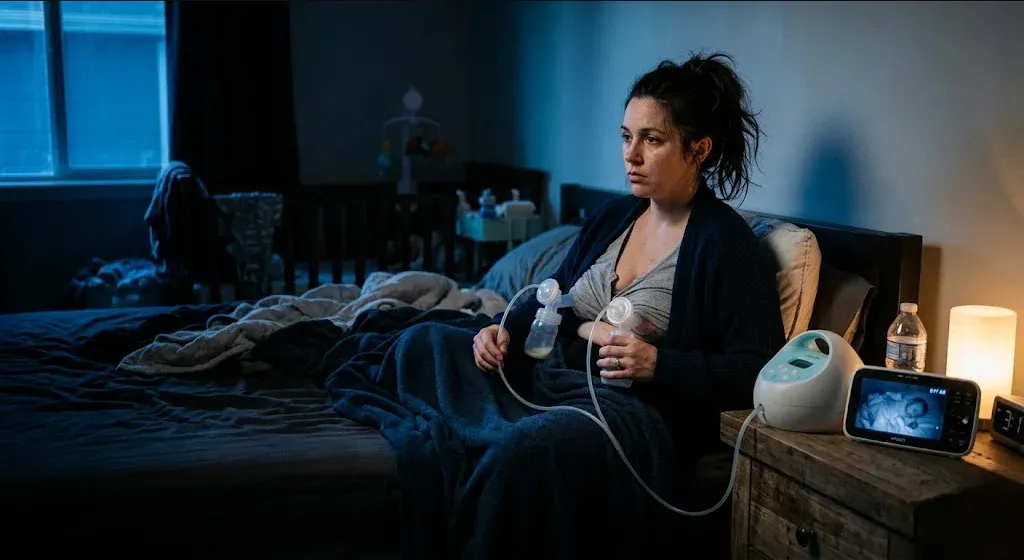
Exclusive pumping is breastfeeding. It requires the same hormonal system, the same nutritional output, the same physical recovery from birth, and it adds layer on top of all of that: the pump itself, the schedule, the cleaning, the storage, the numbers. And unlike nursing, exclusive pumping usually happens in isolation. There is no warmth of a baby at the breast, no natural physical pause. Just you, the machine, and the clock.
The mental health burden of exclusively pumping is significant, and it is almost completely absent from the conversations new parents have with their providers, their partners, and each other. If you are EP and struggling emotionally, this is not weakness. This is the predictable weight of a genuinely difficult choice made in genuinely difficult circumstances.
Why People Exclusively Pump
Exclusive pumping is rarely anyone's first choice. Most EP parents arrive at it through one of a few difficult paths:
A NICU stay, where the baby cannot nurse directly, and the pump becomes the only way to give breast milk. Latch difficulty that persists despite IBCLC support, leaving pumping as the alternative to formula. A nursing relationship that was causing significant pain, aversion, or distress, and EP emerged as a compromise that allowed continued breast milk feeding. A return to work where direct breastfeeding was no longer logistically possible. Adoption or surrogacy, where induced lactation via pump preceded any nursing relationship.
Each of these starting points carries its own emotional weight. The parent who EPs after a NICU stay may be carrying trauma. The parent who EPs because of a difficult latch may be carrying grief about the nursing relationship they expected. The parent who EPs by choice may be carrying defensiveness about a decision that does not match what most people around them expected.
The Specific Weight of the EP Schedule
Exclusively pumping to maintain supply requires pumping every two to three hours around the clock in the early weeks, eight to twelve sessions per day. Each session takes twenty to thirty minutes. Add washing, assembling, and storing parts, and a significant portion of the day is consumed by the equipment.
This is not the same as breastfeeding fatigue, though they share a family resemblance. EP fatigue is uniquely mechanical. The sessions do not end because a baby has had enough. They end when the timer does. The pump does not signal contentment. The only feedback you get is the ounces in the bottle, which is a number that becomes, for many EP parents, the primary measure of their adequacy as a parent.
Supply pressure in exclusive pumping is also particularly intense. Without a nursing baby to regulate supply through varied demand, output can fluctuate in ways that feel alarming and become difficult to interpret. An EP parent tracking pump output in an anxiety spiral is one of the clearest examples of the kind of supply anxiety that looks like responsible management but is actually anxiety-driven compulsion.
Grief, Guilt, and the Nursing Relationship You Didn't Have
Many EP parents carry grief about the nursing relationship they expected and did not get. This grief is real, and it is often compounded by a cultural context in which breastfeeding is depicted almost exclusively as direct nursing, the closeness, the eye contact, the skin-to-skin connection, none of which is the EP experience.
The guilt that often accompanies this grief takes several forms. Guilt about not trying harder to nurse. Guilt about choosing to EP rather than persist with a painful latch. Guilt about the logistical complexity of EP, about what it takes away from other children, from a partner, from ordinary daily functioning. Guilt about eventually stopping.
None of this guilt reflects a parenting failure. Exclusive pumping is choosing to give your baby your milk through the means available to you. That is not falling short of breastfeeding. That is breastfeeding in the form that worked.
Postpartum Depression and Anxiety in EP Parents
Research suggests that exclusively pumping parents may experience postpartum depression at higher rates than parents who directly breastfeed or formula feed, a finding that reflects the difficulty of the schedule rather than any inherent problem with the choice. The isolation of pumping, the disrupted sleep architecture of alarm-based sessions, the physical demands of milk production, and the emotional complexity of the decision-making involved all compound the postpartum period in specific ways.
Postpartum Support International notes that parents who experience high levels of breastfeeding difficulty, including latch failure, painful feeding, and NICU separation, are at elevated risk for postpartum depression and PTSD. Many EP parents have crossed through at least one of these experiences on their way to exclusively pumping.
The signs of postpartum depression in EP parents often look like: not just exhaustion but inability to feel pleasure in any moment, including the pump sessions that are "working." Not just supply anxiety but a pervasive sense of failure that pumping numbers feed rather than relieve. Not just tiredness but a hollowed-out disconnection from the baby that the pump was supposed to help you bond with.
If this resonates, it is worth taking seriously. Postpartum depression is treatable. It does not require you to be in crisis to deserve support. If the EP schedule is compounding a broader mood picture, addressing the mood is at least as important as maintaining the schedule.
The Social Isolation of EP
Nursing a baby, for all its difficulty, is a social object. People talk about it, have opinions about it, recognize it when they see it. EP is invisible. The bottles go in the bag. The pump goes in the closet. In most social settings, no one around you knows what you are doing or what it costs.
This invisibility has a particular cost. Partners may underestimate the schedule. Friends may not understand why you need to leave a gathering every three hours. Extended family may offer formula as though it would solve something. And the EP community, which exists and is substantial, is largely online, which is useful but not the same as being understood in the room.
If you have not found the EP community yet, it is worth looking. The shared experience of people who understand the 3 a.m. alarm pump and the output obsession and the grief about the nursing relationship is genuinely sustaining for many people.
The Mental Health Math of Continuing vs. Stopping
At some point, almost every EP parent asks: is this worth it? And that question deserves a real answer, not a cultural answer.
The real answer depends on you. If the pump schedule is sustainable and EP is working for your family, that is a legitimate path to continue. If the pump schedule is compounding postpartum depression, driving anxiety, eroding your ability to be present with your baby, or cost more than it is giving, stopping may be the more protective choice.
Stopping is not failure. The grief that sometimes comes with stopping is real, and it is worth working through. Our guide to stopping breastfeeding, guilt, and grief addresses what that transition often looks like for EP parents who have given so much to the pump and feel the ending differently than they expected. For more on what the emotional ending of breastfeeding looks like, including the grief that often arrives alongside the relief, see our guide to stopping breastfeeding guilt and grief.
If you are continuing to EP after returning to work, the logistics take on a new layer of complexity. Our guide to pumping at work and mental health covers what the transition back to work adds to the EP experience.
Getting Support
The EP experience benefits from support that takes it seriously as its own thing, not as a variation on nursing, not as formula-feeding-with-extra-steps, but as the specific, demanding, often isolating practice it actually is.
An IBCLC experienced with exclusive pumping can help with the supply mechanics, scheduling, and weaning when the time comes. A perinatal therapist can help with everything else: the grief, the guilt, the anxiety, the depression that sometimes sits under the schedule like water under ice.
Most Phoenix Health therapists hold PMH-C certification from Postpartum Support International. The emotional complexity of the EP experience, the grief about the nursing relationship, the supply anxiety, the physical depletion, is territory they work in. You do not have to explain why this matters as much as it does. Our perinatal mental health therapy page is the right place to start if you are ready to talk to someone.
Frequently Asked Questions
- Bonding is built through many channels — eye contact, responsiveness, physical contact, feeding — and is not dependent on the method of milk delivery. Bottle-feeding expressed breast milk involves all of those elements. The evidence on bonding and feeding method does not show that EP parents bond less with their babies than nursing parents do. That said, the guilt and grief about not having a nursing relationship are real feelings worth acknowledging and working through, separate from the question of whether bonding is actually affected.
- There is no standard duration. Some EP parents pump for a few weeks until latch improves; others pump for twelve months or more. The decision to stop is personal and depends on supply, schedule sustainability, mental health, and the parent's own goals — not on hitting any particular milestone. Any amount of pumped breast milk is a contribution. The length of time EP continues should be determined by what is genuinely working, not by guilt about stopping.
- Yes. A parent's mental health is a legitimate factor in feeding decisions. A parent who is severely depressed, anxious, or physically depleted from the pump schedule cannot care for their baby the way they want to. Stopping EP to protect your mental health is not giving up — it is making a decision that priorities your baby's need for a present, emotionally available parent alongside their nutritional needs.
- The pump gives you a number, and numbers invite scrutiny. When you nurse directly, you don't see ounces — you see a baby who is or isn't satisfied. The EP experience strips away that ambiguity and replaces it with data, which sounds like it should reduce anxiety but often intensifies it. Supply anxiety in EP parents is particularly common because the numbers make the uncertainty visible and constant.
- Yes. In EP parents, PPD sometimes presents through the pump schedule itself: inability to feel satisfaction from sessions that are objectively going well, a widening gulf between effort invested and emotional return, a sense of being trapped by the schedule rather than committed to it. The equipment and the numbers create a visible, concrete surface onto which the depression projects, which can make it harder to see clearly as depression rather than as a breastfeeding problem.
Ready to get support for Postpartum Depression?
Our PMH-C certified therapists specialize in Postpartum Depression and can typically see you within a week.
Not ready to book? Dr. Emily writes a short email series on Postpartum Depression, honest and practical, from a PMH-C therapist who's been through it herself.
No spam · Unsubscribe anytime